A Silent Plea for a Name: The Enduring Mystery of Liège’s “Canadian” John Doe
For over three decades, a young man has lain in a Belgian grave, known only by the case number attached to his tragic death. Since his body was recovered from the Meuse River near the Curtius Museum on July 24, 1989, his identity has been one of Europe’s most poignant cold cases. With no identification and few personal effects, the key to his story is etched into his very skin: a maple leaf tattoo on his right shoulder, a silent, powerful clue that points across the Atlantic and fuels the haunting possibility that he was Canadian. His family, wherever they are, has been waiting for answers for 36 years, unaware that the closure they seek lies in a single, recognizable detail.
The Clues He Carried: A Tattoo, An Earring, and a Mystery
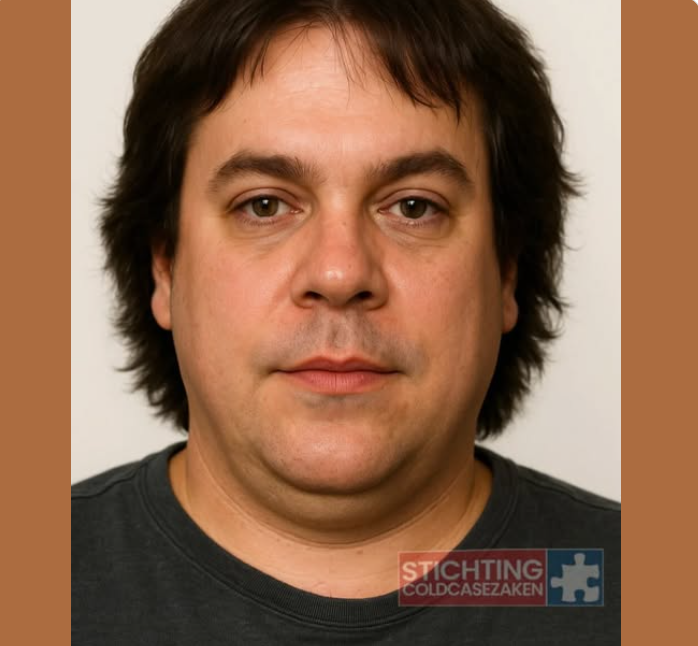
The composite sketch is all we have of his face—a representation of a man estimated to have been between 20 and 30 years old, standing 1.85 meters tall with brown hair. But the physical description only tells part of the story. The true clues are in the marks he chose to make. The maple leaf tattoo is more than just ink; it is a declaration of pride, a piece of home carried on his shoulder, likely obtained before he embarked on his travels. Combined with a hole in his left earlobe, suggesting he wore an earring, a common style for young men in the late 80s, a portrait emerges of a confident, adventurous individual. He was dressed in the universal uniform of a generation: blue Levi’s jeans and a black Western-style belt. These details paint a picture of a real person with a life, a personality, and a story that ended far too soon in the waters of a foreign city.
The Agonizing Silence for a Family That Doesn’t Know
The true heartbreak of this case lies in the relentless, unknown grief of his family. For over three decades, a mother, a father, siblings, or friends in Canada—or elsewhere—have been left with a different kind of pain: the agony of not knowing. They likely filed a missing person’s report that never found a match. They have spent birthdays and holidays wondering if he was alive, imagining a life he might have built for himself. The not-knowing is a unique form of torture, leaving a wound that cannot heal. Their missing son, brother, or friend is not missing. He is waiting. He is waiting for someone to connect the dots between a young man who never came home and a maple leaf tattoo in a Belgian morgue. Their closure is dependent on a single moment of recognition.
You Hold the Key: How a Single Memory Can Solve a 36-Year Mystery
This is not a typical news story; it is a direct appeal to your memory and your heart. Solving this case does not require new forensic technology, but a simple, human connection. Look at the composite sketch. Does his face remind you of a classmate who traveled to Europe after high school and never returned? Did you have a cousin or a friend who spoke of going abroad and then all communication stopped? Perhaps you worked with someone in the late 80s who had a fresh maple leaf tattoo and a dream of seeing the world. Even the smallest, most distant memory could be the breakthrough investigators need. Your share on social media could cross the ocean and land in the feed of the very person who has been searching for answers since 1989. By sharing his face and his story, you are not just spreading a news item; you are acting as a bridge across time and continents, offering a long-overdue name to a forgotten soul and the gift of peace to a family that has been waiting in the dark for 36 years.